




Three Shifts Reshaping Industrial Automation Components Right Now
If you're specifying components for a new piece of equipment or planning a platform upgrade, the question isn't whether things are changing. They are. The question is which changes actually matter for your next project.
After watching the industrial automation components space evolve over the last few years, three shifts stand out as genuinely consequential — not because they're new, but because they're now moving from early adoption to mainstream expectation.
From Discrete to Integrated
The most visible shift is the move away from separate components toward highly integrated modules. This isn't simply about saving panel space. It's about rethinking what a "component" even is.
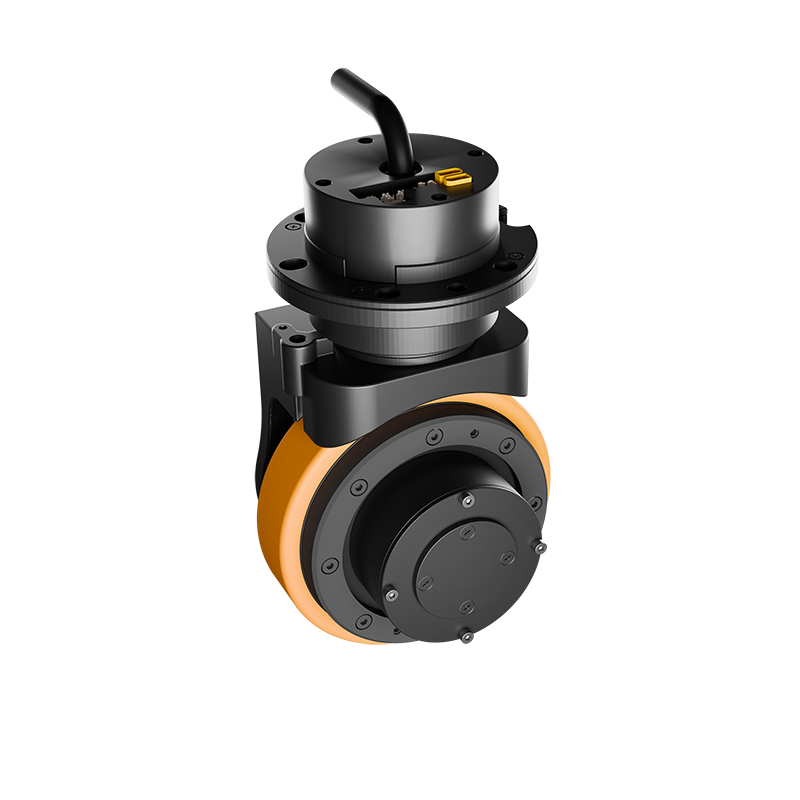
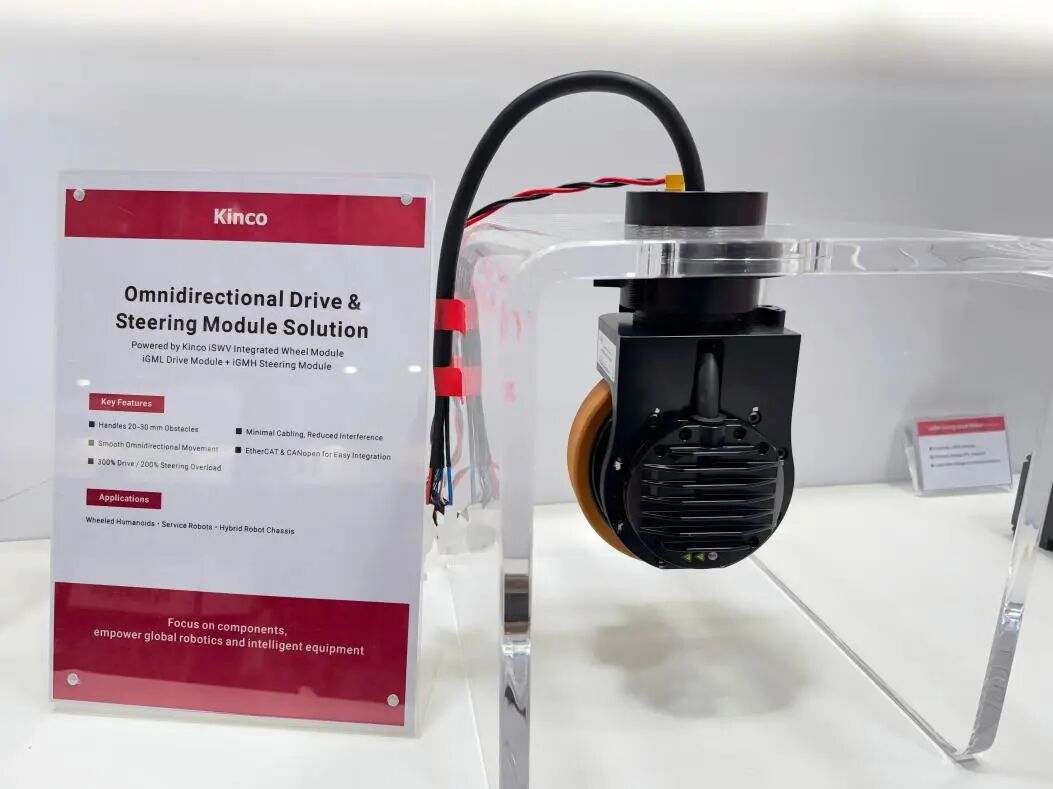
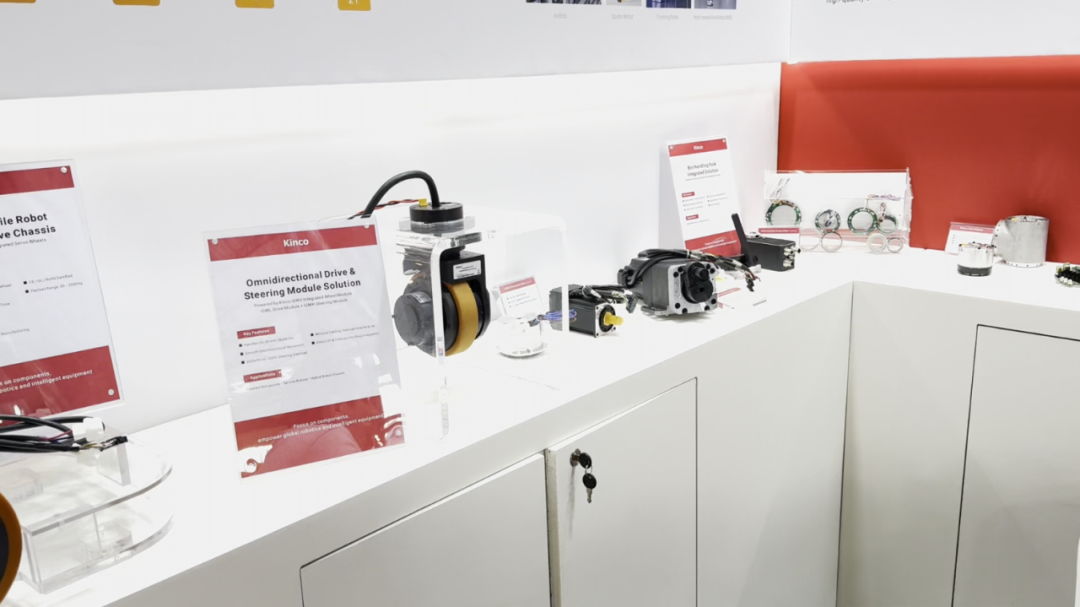
Take mobile robots as an example. A traditional approach might involve a separate motor, driver, reducer, brake, and wheel — each sourced individually, wired together, and mounted separately. Kinco's iWMC integrated servo wheel compresses all of these into a single unit, saving more than 35% of installation space. The servo drive, servo motor, and bus interface are integrated into one compact assembly. The immediate benefits are obvious: faster assembly, less wiring, smaller footprint. But the deeper implication is that the component now arrives as a tested, matched system rather than a collection of parts that need to be integrated on the factory floor.
This pattern extends beyond mobile robots. The iGMK rotary jacking module streamlines structure by 30% for enhanced stability. The iSMD integrated servo motor supports 24–60 VDC input with power from 400 W to 1000 W, integrating motor, drive, encoder, and brake into a single unit.
What's driving this? Equipment manufacturers are under constant pressure to reduce assembly time, minimize failure points, and shorten development cycles. An integrated module delivers on all three. The trend is moving from discrete components toward what Kinco calls "ultimate integration" — and it's reshaping how automation hardware is specified and procured.
Why Robotics Innovation Reshapes Every Automation Component
Robotics has become the application domain that forces the most aggressive innovation in industrial automation components. The requirements are simply more demanding: higher power density, lower weight, tighter thermal management, and smaller form factors.
Humanoid robots represent the sharp end of this trend. The joint modules require frameless torque motors with large hollow shafts for cable routing, high torque-to-inertia ratios, and minimal temperature rise.
Kinco's 4th-generation FMK series covers outer diameters from 25mm to 160mm, compatible with everything from wrist joints to waist joints. The hollow driver design resolves cable routing challenges that would otherwise force compromises in mechanical design.
But here's the key point: these requirements don't stay in robotics. They migrate. The same pressures — lightweight construction, space optimization, thermal management — apply to packaging machinery that runs at higher speeds, material handling equipment that needs to fit into tighter footprints, and assembly systems that demand greater precision. A servo system developed for a robot joint today might end up in a packaging machine tomorrow — just with different packaging.
The iSMD integrated servo motor, for example, supports CANopen, Modbus RTU, EtherCAT, and Profinet — communication options that make it equally at home in a robotic arm or a general automation application. The robotics sector is effectively raising the performance bar for the entire industrial automation components industry, and that bar lifts every equipment category along with it.
Security Is Becoming a Procurement Requirement
Here's a shift that doesn't show up on a spec sheet but matters just as much: cybersecurity is becoming an increasingly important procurement consideration for industrial automation components.
The trigger is regulatory. The EU Cyber Resilience Act (CRA) is reshaping market access requirements for automation hardware sold in Europe. But even beyond compliance, end users are increasingly asking about security during procurement — not as a checkbox, but as a genuine concern about operational risk.
In June 2026, Kinco's R&D system across its industrial automation product portfolio achieved IEC 62443-4-1 Maturity Level 2 (ML2) certification. This isn't a marketing badge. IEC 62443 is the leading international cybersecurity standard for industrial automation and control systems, covering the entire product development lifecycle.
ML2 certification means the secure development lifecycle is repeatable and standardized — security is built into the engineering process rather than bolted on afterward. The certification process embeds "shift-left security" throughout every stage of the engineering process, identifying and mitigating potential vulnerabilities early in development.
The practical implication is straightforward: if you're selecting components for equipment that will be deployed in regulated markets or connected environments, the vendor's security posture matters.
It affects your compliance burden, your vulnerability to operational disruptions, and your ability to meet customer requirements. This trend is still early in its adoption curve, but it's moving fast. The direction is clear — industrial automation components are becoming cybersecurity products as much as motion control products.
What This Means for Your Next Equipment Investment
Stepping back, these three shifts point to a common theme for industrial automation solutions: the definition of a "good" component is expanding. It's no longer enough to have the right torque curve or the right communication protocol.
First, consider integration. Does the supplier offer modules that reduce your assembly steps, or are you still piecing together discrete components? Integrated solutions like the iWMC servo wheel or iSMD motor don't just save space — they reduce failure points and shorten time-to-market.
Second, evaluate performance trajectory. Is the supplier investing in robotics-grade capabilities? The components that meet robotics demands today will become the baseline for general automation tomorrow. If your supplier isn't pushing into that performance tier, their products may lag as the industry standard rises.
Third, assess security maturity. Has the supplier achieved recognized cybersecurity certification? IEC 62443-4-1 ML2 certification signals that security is embedded in the development lifecycle, not an afterthought. With regulations like the EU CRA reshaping market access, this isn't optional for equipment destined for global deployment.
Fourth, look at lifecycle commitment. Is the supplier investing in next-generation capabilities? Kinco, for example, is already working toward IEC 62443-4-1 Maturity Level 3 (ML3) certification — a signal that security development is an ongoing priority, not a one-time achievement.
The vendors that answer these questions well are the ones building components that will still look current in five years. The ones that don't — their products will still work, but they'll increasingly require workarounds, additional integration effort, and compliance overhead. In this industry, that's not a competitive position you want to be in.


